
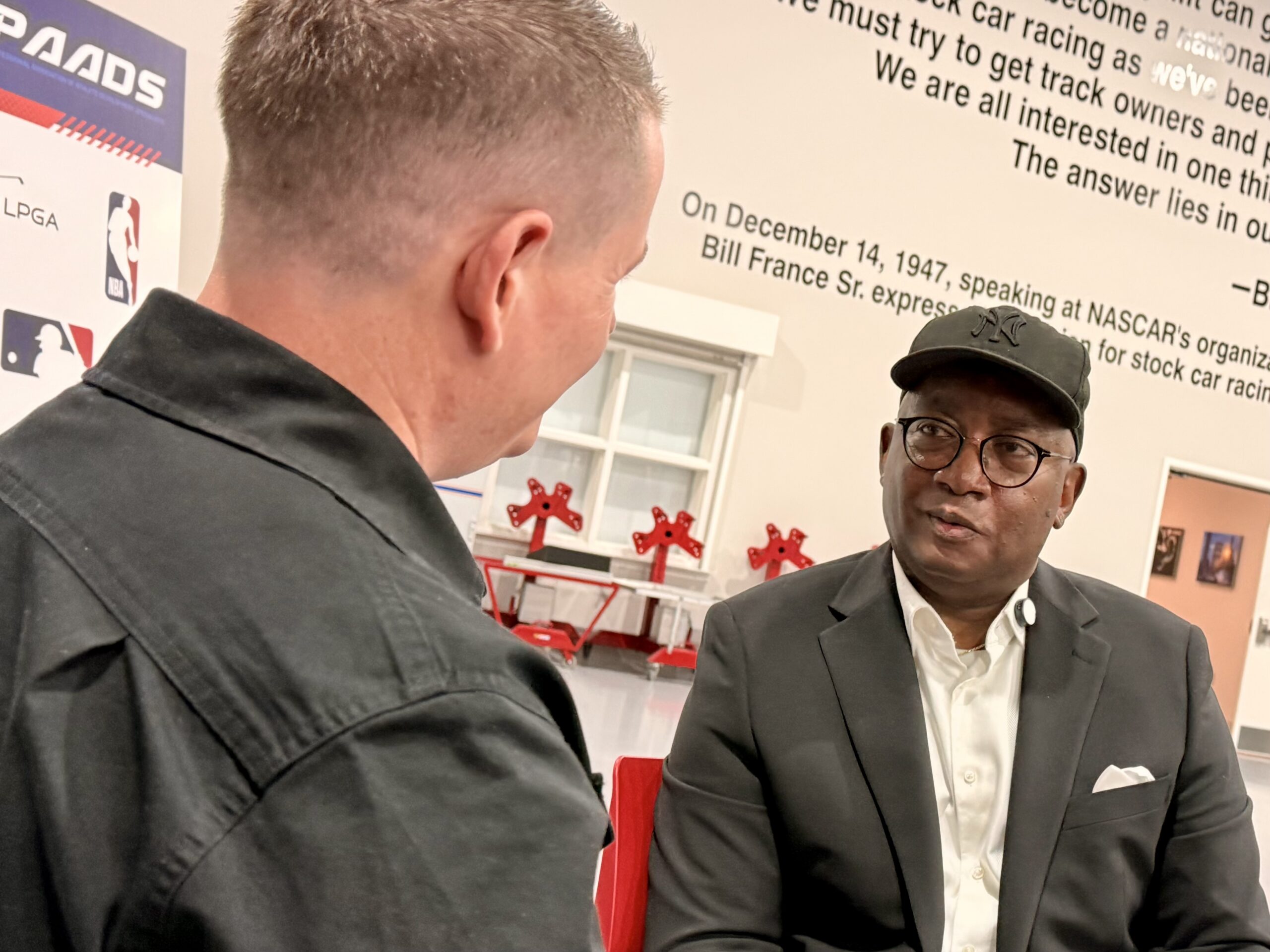
CONCORD, NC — I’ve covered a lot of rooms in my career.
Press rooms. Locker rooms. Crisis rooms.
But I’ve never quite seen a room like this.
The 20th Annual PAADS (Professional Association of Athlete Development Specialists) Symposium brought together one of the most impressive collections of athlete development professionals I’ve ever encountered—people from across the country and around the world, all focused on one thing:
Making the athlete better prepared for life.
And not just on the field.
This Was Different
What stood out immediately wasn’t just the size of the gathering…
It was the intention. It was hosted by the folks at NASCAR. And not to sound cliche’ish…this thing was faster than a race car. And the R&D Center was the perfect setting. No pretense. No pomp. Just athlete development researchers on a laser-focused mission.
Everywhere you turned, the conversations were layered and meaningful:
- Mental health support for athletes under pressure
- Financial literacy and long-term wealth protection
- Safeguards against exploitation in the NIL era
- Preparing athletes for life after the game
There was a clear, unified message:
We’re not just developing players anymore… we’re developing people.
And that matters.
Before I go on, I want to thank Stephanie Thornburn and her staff, (Duncan, Tanya, Xenia and several others were just incredible…and treated my CFO (Al Nolan) and I like royalty).
The Reality of Today’s Athlete
One of the more eye-opening conversations centered around something every athlete deals with—but few are equipped to handle:
Social media toxicity.
A Sister from the University of Florida (Aoyang Shi) laid out the reality of how attacks against athletes (on social media) can actually impact the performance of a player– just before he or she goes on the floor to perform! I never ever thought of that. Her focus was on women’s basketball, and how teams are often telling their players, “don’t go online before you play in a game”. It wasn’t just sage advice– I was almost a mandate, based on her research.
I also met Shane Britten, who’s built an app designed to protect athletes from online abuse. The concept is simple—but powerful:
Athletes can program specific words or phrases they don’t want to see. If those words show up in their mentions or messages?
They never reach them.
Filtered. Blocked. Gone.
Think about that for a second.
Because multiple professionals—many with PhDs in psychology and performance—made something very clear:
What an athlete sees on their phone before a game can impact how they perform during the game.
That’s not theory anymore.
That’s reality.
The Level of Care Was Impressive
This wasn’t surface-level talk.
This was deep, intentional work being shared by people who genuinely care about protecting athletes:
- Emotionally
- Financially
- Professionally
- Personally
And it left me with one overwhelming thought:
These gatekeepers are doing incredible work.
But There’s a Gap
As impressive as it all was…
There’s one area that isn’t being addressed at the same level.
Strategic communication.
Because here’s the truth:
An athlete can be mentally strong… financially educated… physically prepared…
And still lose everything with one bad moment in front of a camera.
Or one poorly thought-out post.
Or one emotional response to the wrong person at the wrong time.
Where Next Tally Fits In
This is where Next Tally comes in.
While so many of these professionals are focused on building the athlete…
We focus on protecting the athlete’s voice.
- What to say
- What not to say
- When to say nothing at all
- How to navigate media pressure
- How to avoid moments that cost endorsements, contracts, and credibility
Because in today’s sports world:
Talent gets you noticed.
But communication keeps you in the game.
Why This Matters Now
In the NIL era…
In the age of viral clips…
In a world where one quote can travel faster than your highlight reel…
Communication is no longer optional. It’s survival.
And yet—it’s still one of the least formally trained skills in athlete development.
A Personal Note
I didn’t walk into this room as an outsider.
I walked in as someone who’s spent a career in the media—asking the questions, covering the stories, and watching in real-time how quickly narratives can shift.
So when I say there’s a gap here…
It’s not criticism.
It’s opportunity.
Final Thought
The PAADS Athlete Symposium showed me something important:
There is a growing army of professionals dedicated to protecting athletes in ways we’ve never seen before.
And that’s powerful.
But if we truly want to prepare athletes for everything they’re about to face…
We have to include the one thing that touches every moment of their career:
How they communicate with the world.
-Unk
Leave a Reply